Unlock the secrets to mastering English grammar with our comprehensive guide on “How to use although and though in negative sentences.” This article provides 100 practical examples, essential tips for exams, FAQs, and more—ideal for students, competitive exam aspirants, and English learners aiming for accuracy and fluency.
How to Use Although and Though in Negative Sentences
Understanding how to use although and though in negative sentences is crucial for clear and effective communication in English. These conjunctions help express contrast, especially when forming complex sentences with negative meanings.
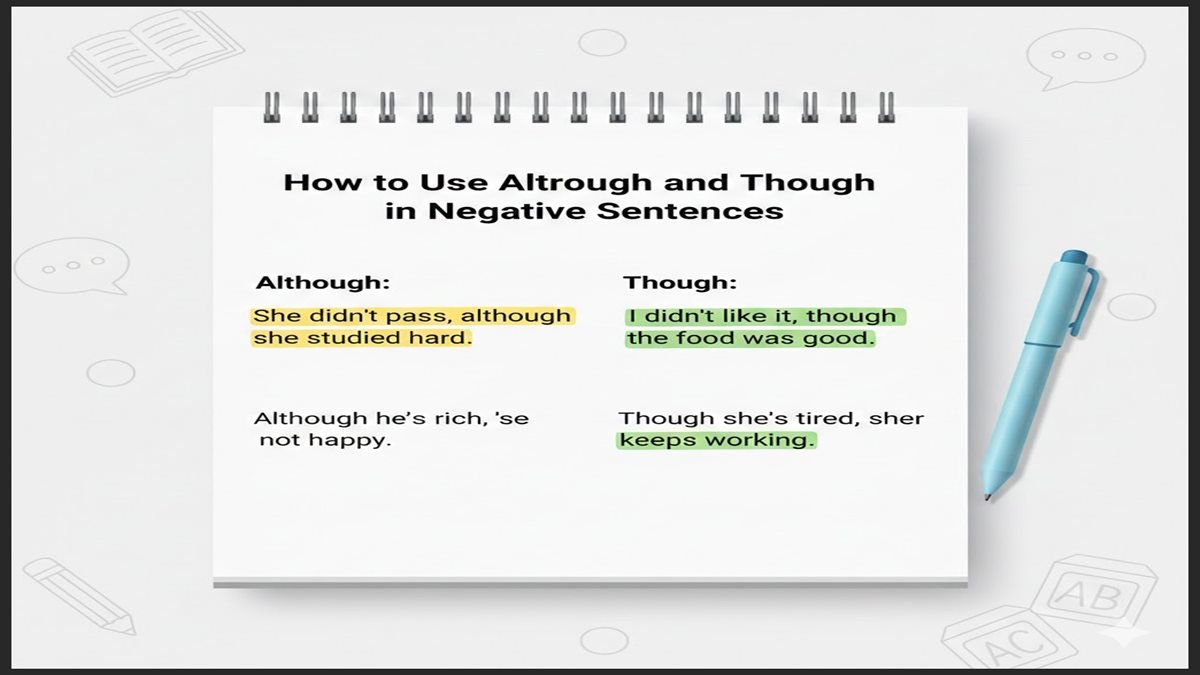
Whether you are a student, a candidate preparing for competitive exams, or simply looking to improve your grammar, mastering this topic is essential. This guide will provide a comprehensive explanation, 100 real-life examples, important tips, and answers to common questions about how to use although and though in negative sentences. 100 Examples of How to Use Although and Though in Negative Sentences
- Although he didn’t study, he passed the exam.
- Though she wasn’t invited, she attended the party.
- Although they didn’t win, they played very well.
- Though I don’t like coffee, I drank it to stay awake.
- Although she didn’t agree, she followed the instructions.
- Though he didn’t call, I knew he cared.
- Although we don’t have much time, we can finish this.
- Though the weather wasn’t good, we went hiking.
- Although I didn’t expect much, the movie was great.
- Though they don’t speak English well, they made friends easily.
- Although she didn’t feel well, she went to work.
- Though he doesn’t like vegetables, he ate the salad.
- Although I didn’t sleep well, I feel energetic today.
- Though we don’t have enough money, we are happy.
- Although the answer wasn’t correct, the teacher praised him.
- Though I don’t know her, I trust her judgment.
- Although the food wasn’t tasty, I finished my meal.
- Though he didn’t apologize, I forgave him.
- Although I don’t usually read novels, I enjoyed this one.
- Though they didn’t practice much, they performed well.
- Although she doesn’t like dancing, she joined the competition.
- Though I didn’t understand everything, I learned a lot.
- Although the train wasn’t on time, we reached early.
- Though he doesn’t drive, he knows all the traffic rules.
- Although they didn’t prepare, they managed to succeed.
- Though I don’t like rain, I walked to work.
- Although she wasn’t ready, she gave a great presentation.
- Though he doesn’t own a car, he travels a lot.
- Although I didn’t want to go, I enjoyed the event.
- Though we don’t have a big house, it’s comfortable.
- Although the solution wasn’t perfect, it worked.
- Though she didn’t say much, her words were meaningful.
- Although I don’t watch TV, I know about the show.
- Though he wasn’t happy, he congratulated her.
- Although they don’t have children, they love kids.
- Though I didn’t believe it, the story was true.
- Although the results weren’t expected, we accepted them.
- Though she doesn’t like pets, she adopted a cat.
- Although I didn’t win, I enjoyed participating.
- Though he wasn’t invited, he came to the meeting.
- Although the plan didn’t work, we tried our best.
- Though I don’t eat sweets, I had a piece of cake.
- Although she didn’t pass, she didn’t give up.
- Though the offer wasn’t attractive, he accepted it.
- Although I didn’t agree, I respected his opinion.
- Though he doesn’t know French, he traveled to Paris.
- Although the book wasn’t interesting, I finished it.
- Though she doesn’t like sports, she joined the team.
- Although I didn’t get the job, I am not disappointed.
- Though we don’t see each other often, we are close friends.
- Although he wasn’t prepared, he answered the questions.
- Though I don’t have experience, I will try my best.
- Although the task wasn’t easy, we completed it.
- Though she didn’t ask for help, we supported her.
- Although I don’t like loud music, I attended the concert.
- Though he wasn’t rich, he was generous.
- Although we didn’t expect visitors, we welcomed them.
- Though she doesn’t enjoy cooking, she made dinner.
- Although I didn’t get enough sleep, I woke up early.
- Though the movie wasn’t popular, I liked it.
- Although he doesn’t play chess, he joined the club.
- Though I didn’t finish on time, I submitted my work.
- Although she wasn’t aware, she helped a lot.
- Though the answer wasn’t obvious, he found it.
- Although I don’t usually travel, I went abroad last year.
- Though he doesn’t eat meat, he cooked chicken for us.
- Although the weather wasn’t cold, I wore a jacket.
- Though we didn’t have tickets, we entered the event.
- Although she doesn’t like crowds, she attended the festival.
- Though I didn’t see the sign, I found the place.
- Although he wasn’t tired, he went to bed early.
- Though the food wasn’t hot, it tasted good.
- Although I don’t know the answer, I will guess.
- Though she didn’t expect a gift, she was happy.
- Although the work wasn’t finished, the manager was satisfied.
- Though he doesn’t watch football, he knows the players.
- Although I didn’t plan the trip, I enjoyed it.
- Though she wasn’t interested, she listened carefully.
- Although the phone wasn’t expensive, it works well.
- Though I don’t like spicy food, I tried the dish.
- Although he wasn’t confident, he spoke clearly.
- Though the exam wasn’t difficult, I made mistakes.
- Although I didn’t hear the alarm, I woke up on time.
- Though she doesn’t like winter, she went skiing.
- Although the meeting wasn’t long, it was productive.
- Though he didn’t bring his ID, he entered the building.
- Although I don’t like flying, I travel often.
- Though she wasn’t sure, she answered the question.
- Although the story wasn’t funny, I laughed.
- Though I didn’t see anyone, I heard voices.
- Although he doesn’t have a degree, he is successful.
- Though the shop wasn’t open, we waited outside.
- Although I didn’t bring my umbrella, I didn’t get wet.
- Though she doesn’t like reading, she finished the book.
- Although the car wasn’t new, it’s reliable.
- Though I didn’t know the rules, I played the game.
- Although he doesn’t like swimming, he joined us at the pool.
- Though the answer wasn’t easy, he solved it.
- Although I didn’t want dessert, I ate some ice cream.
- Though she wasn’t feeling well, she attended the class.
Important Tips & Information
- Although and though are interchangeable but “although” is slightly more formal.
- Both are used to introduce contrast, even when the main or subordinate clause is negative.
- In competitive exams, using these conjunctions correctly can help candidates score better in sentence improvement and error spotting sections.
- Negative sentences after although/though usually follow this pattern:
Although/Though + subject + negative verb, main clause. - Avoid using “but” in the same sentence with “although” or “though.”
- Practice forming sentences to gain confidence, especially for exams like IELTS, TOEFL, SSC, and banking.
FAQs: How to Use Although and Though in Negative Sentences
Q1: Can we use although and though at the beginning of a negative sentence?
Yes, both can begin a sentence that contains a negative verb, e.g., “Although I don’t like tea, I drank it.”
Q2: Is there any difference between although and though in negative sentences?
No significant difference in meaning, but “although” is more formal and often used in writing.
Q3: Can we use but with although or though in the same sentence?
No, using “but” with “although” or “though” in the same sentence is incorrect. Conclusion
Learning how to use although and though in negative sentences is vital for mastering English grammar, especially for students and candidates preparing for competitive exams. Practice with examples, understand the rules, and avoid common mistakes to communicate more effectively. Meta Tags
Disclaimer
This article is for educational purposes only. While every effort has been made to ensure accuracy, consult official grammar guides or exam syllabi for specific requirements. Social Media
Also Read: How to Use Since and For in Past Perfect: Simple Rules, Tips, and 100 Examples
How to Use Even Though and Even If: 100 Examples for Perfect English Grammar
About The Author
