Master the art of clear and powerful communication by understanding sentence structure. This guide breaks down the fundamentals, types, and rules of sentence construction, essential for writers, students, and competitive exam candidates. Improve your writing score, avoid common errors, and express your ideas with precision.
Introduction: Sentence Structure
Understanding sentence structure is the cornerstone of effective communication. Whether you’re crafting an essay, a business report, or answering questions in a high-stakes competitive examination, a firm grasp of how to construct sentences correctly determines the clarity, impact, and professionalism of your writing. This comprehensive guide will delve into the essential components, types, and rules of sentence structure, providing you with the knowledge to write with confidence and precision.
Important Tips for Students & Exam Candidates
- Identify Core Components: Always locate the subject and verb first. This helps in diagnosing fragments and run-on sentences, common errors in objective tests.
- Vary Your Structures: Mix simple, compound, and complex sentences to create a rhythm in your essay writing. This demonstrates linguistic range and keeps the reader engaged.
- Parallelism is Key: In lists or comparisons, ensure all items follow the same grammatical pattern (e.g., “She likes reading, writing, and hiking” NOT “…reading, to write, and hiking”).
- Modifier Placement: Place adjectives, adverbs, and phrases close to the word they modify to avoid confusing meanings (e.g., “He almost drove the car for six hours” vs. “He drove the car for almost six hours”).
- Practice Error Spotting: For exams like SAT, GRE, or banking exams, regularly practice questions on sentence correction, focusing on subject-verb agreement, modifier errors, and conjunction usage.
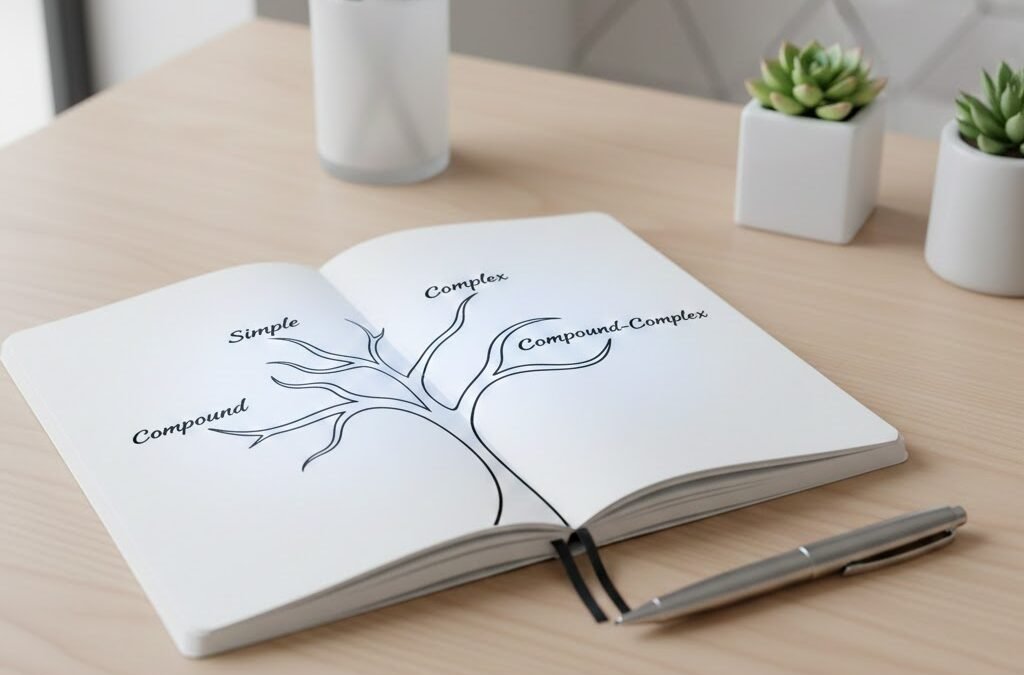
100 Examples of Sentence Structure
Simple Sentences:
- The sun shines.
- Birds sing beautifully.
- She read the book.
- The computer crashed suddenly.
- Time flies.
- He laughed.
- The garden is blooming.
- They arrived early.
- Learning takes patience.
- The door closed.
- My phone rang.
- Coffee helps me focus.
- The project succeeded.
- Wind howled.
- Children played.
- The idea seemed brilliant.
- We celebrated.
- The light faded.
- Practice matters.
- The solution works.
- Ice melts.
- She smiled.
- The audience applauded.
- Prices rose.
- The train departed.
Compound Sentences:
- I wanted to go, but I was too tired.
- She speaks French, and she understands Spanish.
- You can start now, or you can wait for instructions.
- He tried his best, yet he did not succeed.
- It was raining, so we stayed indoors.
- I finished my work, for I had a deadline.
- He must study hard, or he will fail the exam.
- She loves music, yet she cannot play an instrument.
- Call me tomorrow, and we will discuss the plan.
- The food was delicious, but the service was slow.
- We can walk, or we can take the bus.
- He was late, so he missed the introduction.
- She exercised daily, for she valued her health.
- The movie was long, yet it was entertaining.
- Take an umbrella, for it might rain.
- I like tea, but my brother prefers coffee.
- He apologized, and she forgave him.
- Work hard, or you will regret it later.
- The path was steep, yet we continued climbing.
- She was tired, so she went to bed early.
- The plan is complex, but it is achievable.
- Save your money, for you will need it later.
- He was disappointed, yet he remained hopeful.
- Study the map, or you might get lost.
- The concert was loud, so my ears are ringing.
Complex Sentences:
- Although it was raining, we went for a walk.
- She returned the book after she finished reading it.
- Because he studied diligently, he aced the exam.
- The house that we bought needs renovation.
- If you save money, you can buy a car.
- While I was cooking, the phone rang.
- I will visit you when I come to the city.
- Unless you hurry, you will miss the flight.
- Since you are here, let’s begin the meeting.
- He failed the test because he did not study.
- Although she was afraid, she gave the speech.
- This is the village where I grew up.
- Whenever I feel sad, I listen to music.
- As the sun set, the sky turned orange.
- Provided that you agree, we can proceed.
- The author who wrote this book is famous.
- Even though he is rich, he lives simply.
- I know a place where roses bloom.
- Before you decide, consider all options.
- Whether you like it or not, the rule applies.
- She smiled as if she knew a secret.
- The report, which was published yesterday, is crucial.
- Since it’s a holiday, the office is closed.
- I’ll help you if you ask politely.
- Though he apologized, she was still upset.
Compound-Complex Sentences:
- While I was reading, my brother watched TV, and my sister played games.
- If you save money, you can travel, but you must plan carefully.
- The team, which worked tirelessly, won the championship, and the city celebrated.
- Although he was tired, he finished his homework, and then he went to bed.
- When the bell rang, the students left, but the teacher remained.
- Because the weather was perfect, we had a picnic, and we stayed until sunset.
- She loves the dress that she bought yesterday, so she will wear it to the party.
- After the movie ended, we got dinner, and we discussed the plot.
- If you submit the form today, the process will be faster, but you must include all details.
- The manager who hired me gave good advice, and I have followed it ever since.
- Although it was expensive, we bought the car, for we needed reliable transport.
- When you receive the email, please reply promptly, or call the office.
- Because the road was blocked, we took a detour, which made us late.
- He explained the concept, and I understood it after he gave an example.
- If you practice daily, your skills will improve, and you will gain confidence.
- The book that I borrowed is fascinating, so I will recommend it to my friends.
- Although she prepared well, she was nervous before the interview, yet she performed excellently.
- Since the system was updated, efficiency has improved, and errors have reduced.
- When the leader arrived, the meeting began, and we reviewed the agenda.
- I will support your decision if you provide valid reasons, but I need to analyze the data first.
- The artist, who is quite reclusive, held an exhibition, and it was a major success.
- Because the demand was high, they increased production, yet they maintained quality.
- After he finished his degree, he got a job, and he moved to a new city.
- If the data is accurate, we can proceed, but we must get approval first.
- Although the task seemed difficult, we collaborated, and we completed it on time.
FAQs: Sentence Structure
Q1: What is the most common mistake in sentence structure?
A1: The most common errors are sentence fragments (incomplete sentences missing a subject or verb) and run-on sentences (two independent clauses incorrectly joined without proper punctuation or conjunctions).
Q2: How can I improve my sentence structure for competitive exams?
A2: Focus on mastering subject-verb agreement, parallelism, and the correct use of modifiers. Regularly practice error-spotting questions and read high-quality editorial content to internalize varied structures.
Q3: Does varying sentence structure really improve my writing score?
A3: Absolutely. Examiners and assessors look for syntactic maturity. A mix of simple, compound, and complex sentences demonstrates control over language, enhances readability, and makes your argument or narrative more persuasive and sophisticated.
Conclusion: Sentence Structure
Mastering sentence structure is not merely an academic exercise; it is a vital skill that empowers you to convey your thoughts with clarity, authority, and style. From acing standardized tests to crafting compelling professional documents, a deliberate and varied approach to constructing sentences will significantly elevate the quality of your communication. Begin by analyzing the sentence structure in your own writing, implement the rules and tips outlined here, and witness the transformation in your expressive power.
Disclaimer: This article is for educational purposes. While every effort has been made to ensure accuracy, language rules can have exceptions and evolve. For specific exam formats, always refer to the latest official guidelines and prescribed materials.
Also Read: How to Use “Until” and “Till” in Negative Sentences: Rules, Tips, and 100 Clear Examples
How to Use Too and Enough with Adverbs – Rules, Examples, and Exam Tips
About The Author
