Mastering the “there,” “their,” and “they’re” difference is a cornerstone of English grammar that can make or break your writing’s professionalism. These homophones sound identical but have distinct meanings and uses. Confusing them is a common error, but with clear rules and examples, you can learn to use each one correctly every time. This guide provides the definitive explanation with 100 examples to cement your understanding.
Introduction to There, Their, They’re
Navigating the English language’s homophones is a fundamental writing skill, and few trios cause as much confusion as “there,” “their,” and “they’re.” Understanding the precise “there their they’re difference” is non-negotiable for clear and credible communication, whether in academic papers, professional emails, or social media posts. This persistent mix-up can undermine your message, but it is easily resolved. This article will serve as your comprehensive manual, breaking down each word’s function with rules, tips, and an extensive list of examples to ensure you never second-guess yourself again.
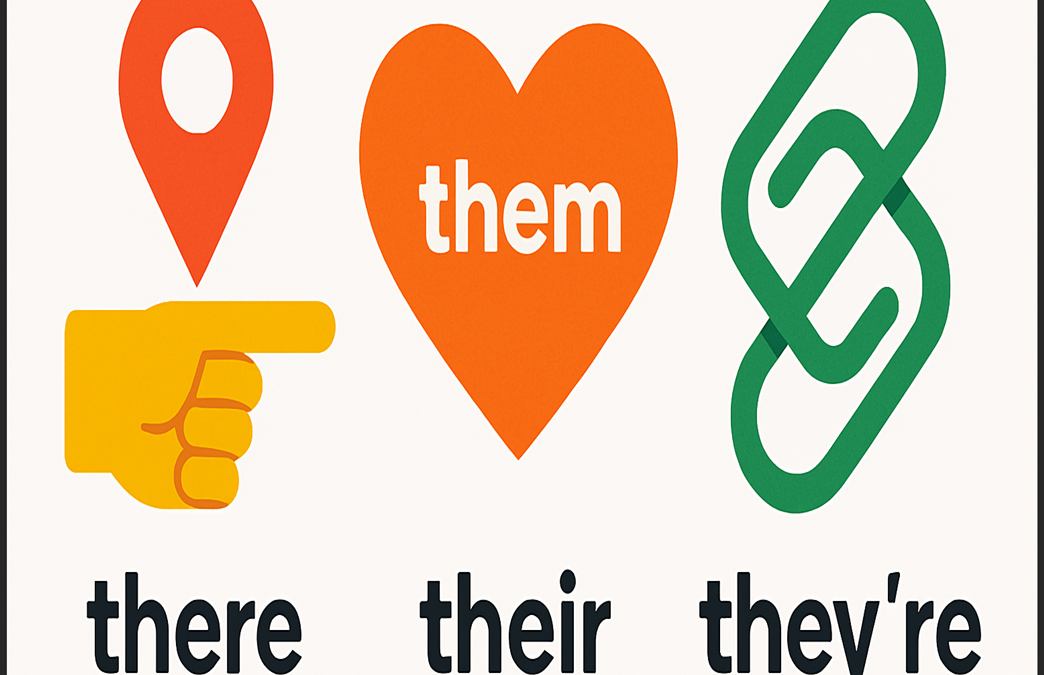
The “There, Their, They’re” Difference Explained
- There is used to indicate a place or location, or to introduce a statement.
- Example: The book is over there on the table. There are many reasons to learn grammar.
- Their is a possessive adjective, showing that something belongs to “them.”
- Example: The students submitted their assignments. They love their new house.
- They’re is a contraction, a shortened form of “they are.”
- Example: They’re going to the cinema tonight. I think they’re absolutely right.
Important Tips for Students and Exam Candidates
- The Substitution Test: This is the most reliable trick. If you can replace the word with “they are” and the sentence still makes sense, use they’re. If you can replace it with “his” or “her” (showing possession), use their. If it points to a place or introduces something, use there.
- Spell-Check is Not Infallible: Grammar checkers often miss these errors because all three are valid words. Careful proofreading is essential.
- A Common Exam Pitfall: Competitive exams frequently test this concept in error-spotting and sentence correction sections. A wrong usage is considered a basic grammatical flaw and can cost you marks.
- Build a Mental Checklist: Before finalizing any written answer, quickly scan for these three words and verify their usage using the rules above.
100 Examples of “There, Their, They’re” in Sentences
- Put the box down over there.
- They’re planning a surprise party.
- Is that their final decision?
- There is no milk left in the fridge.
- I hope they’re ready for the challenge.
- The team celebrated their victory.
- Look at the clouds over there.
- Do you know if they’re coming?
- The children finished their homework.
- There will be a meeting at noon.
- I heard they’re moving to a new city.
- The company updated their website.
- There are too many cars on the road.
- They’re known for their excellent service.
- I left my keys right there.
- Do you think they’re happy with their results?
- The birds built their nest in the tree.
- There seems to be a misunderstanding.
- I wonder what they’re cooking. It smells good.
- The athletes wore their national colors.
- I’ve never been there before.
- They’re always willing to help.
- Students must bring their own laptops.
- There goes my bus!
- They’re proud of their heritage.
- Please stand over there.
- I believe they’re mistaken.
- The artists displayed their work.
- There is an old castle on the hill.
- They’re unsure about their travel plans.
- The cat chased its tail over there.
- They’re going to love their new puppy.
- The family sold their old car.
- There are many fish in the sea.
- They’re late because of their flight delay.
- My friends are waiting for me there.
- I don’t think they’re telling the truth.
- The employees voiced their concerns.
- There is no place like home.
- They’re certain about their answer.
- We walked from there to the park.
- They’re known for their kindness.
- The kids lost their soccer ball.
- There appears to be a problem.
- They’re excited for their vacation.
- The store is just over there.
- I hope they’re careful with their new equipment.
- The scientists published their findings.
- There was a loud noise outside.
- They’re responsible for their actions.
- Sit anywhere over there.
- They’re working on their project.
- The team changed their strategy.
- There are no easy solutions.
- They’re hosting the event at their house.
- I saw him standing there yesterday.
- They’re practicing for their performance.
- The authors signed their books.
- There might be rain later.
- They’re donating their old clothes.
- The answer is written there on the board.
- They’re learning to play the guitar.
- Passengers should check their luggage.
- There is hope for the future.
- They’re famous for their chocolate.
- We drove from there to the coast.
- I heard they’re getting married.
- The players gave their best effort.
- There have been many changes.
- They’re cleaning their rooms.
- I left my bag right there.
- They’re worried about their exam.
- The couple celebrated their anniversary.
- There is a good restaurant nearby.
- They’re investing in their education.
- The path leads over there.
- I know they’re busy with their jobs.
- The volunteers shared their experiences.
- There was a time when I didn’t know.
- They’re planting trees in their garden.
- He lives in that house over there.
- They’re confident in their abilities.
- The committee announced their decision.
- There isn’t enough time.
- They’re saving money for their trip.
- Meet me there at five o’clock.
- I think they’re enjoying their holiday.
- The soldiers followed their orders.
- There comes a point when you must decide.
- They’re renovating their kitchen.
- I saw it with my own eyes, right there.
- They’re taking their dog for a walk.
- The musicians tuned their instruments.
- There are two sides to every story.
- They’re discussing their options.
- The light is coming from over there.
- They’re completing their training.
- The farmers harvested their crops.
- There you are! I’ve been looking for you.
- They’re grateful for their friends.
FAQs on There, Their, They’re
Q1: What is the easiest way to remember the difference?
A1: Use the substitution test. Try replacing the word in your sentence. If “they are” fits, use they’re. If “his/her” fits (showing ownership), use their. If it points to a place, use there.
Q2: Is it ever correct to use “their” when referring to a single person?
A2: Yes. “Their” is widely accepted as a singular gender-neutral pronoun when referring to a person whose gender is unknown or non-binary. Example: “Each student should submit their own work.”
Q3: Can “there” be used for anything other than a place?
A3: Yes. “There” is also used as a pronoun to introduce a sentence or clause where the subject comes after the verb (called an expletive). Examples: “There are many books.” “There seems to be an issue.”
Conclusion on There, Their, They’re
Mastering the “there their they’re difference” is a simple yet powerful step toward impeccable writing. By internalizing the distinct roles of there (place/introduction), their (possession), and they’re (contraction for “they are”), you can communicate with greater precision and authority. Consistent practice, using tricks like the substitution test, will make correct usage second nature. Let this guide be the final resource you need to confidently conquer this common grammatical hurdle.
Disclaimer on There, Their, They’re
This article is intended for educational and informational purposes. While every effort has been made to ensure accuracy, language usage can evolve, and specific style guides (e.g., APA, MLA, Chicago) may have nuanced preferences. For authoritative rulings in formal contexts, consult the relevant style manual or dictionary.
Also Read: Your vs You’re: An Easy Explanation to Finally Get It Right
Beside vs Besides Grammar Usage: 100 Practice Sentences
About The Author
