Mastering “lay” vs. “lie” in present and past tenses is a common grammar hurdle. This guide provides clear rules, actionable tips, and 100 practical examples to eliminate confusion forever. Whether for writing, exams, or daily use, understanding lay vs lie present and past will sharpen your communication skills and boost your confidence.
Introduction: Lay vs Lie Present and Past
The vexing puzzle of lay vs lie present and past trips up even experienced writers. The confusion stems from their similar meanings and the fact that the past tense of “lie” is “lay.” This article demystifies the rules completely, providing a straightforward framework, essential tips for exam preparation, and extensive examples. By the end, you will have a solid command of when to lay an object down and when to lie down yourself.
Important Tips/Information for Students & Competitive Exams:
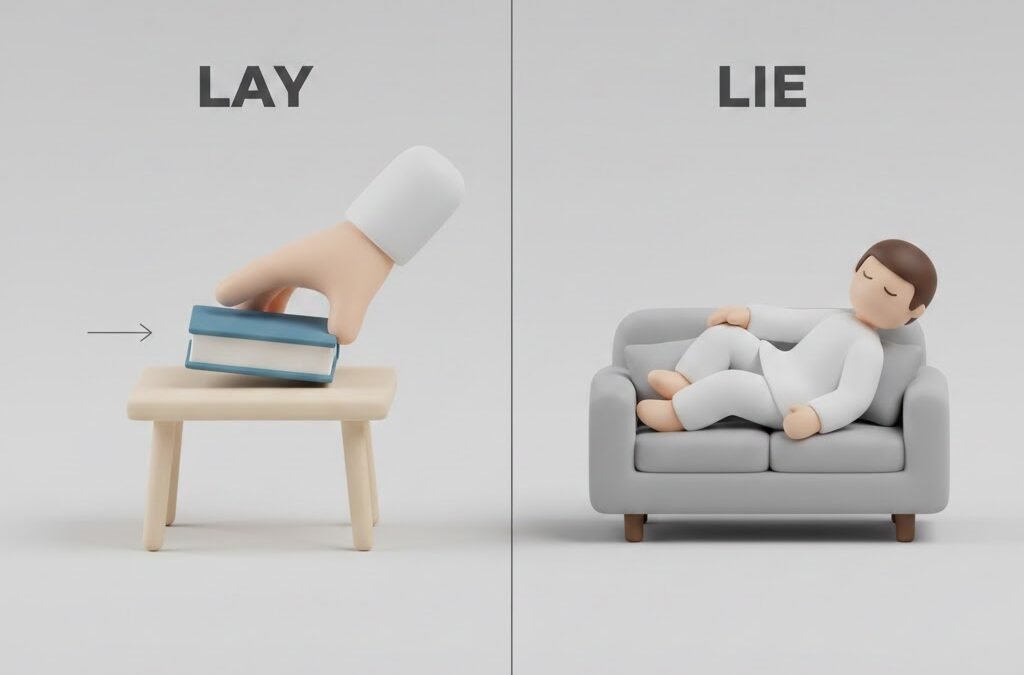
- Core Rule: Lay requires a direct object (you lay something down). Lie does not take a direct object (you lie down).
- Memory Aid: Think “pLAce” and “recLIne.” You pLAce an object (lay), and you recLIne yourself (lie).
- The Biggest Pitfall: The past tense of “lie” (to recline) is “lay.” This is the most common source of error. Always ask: Is this past tense for “to recline”? If yes, use “lay.”
- Tense Cheat Sheet:
- Lay (to put): Present: lay/lays; Past: laid; Past Participle: laid; Present Participle: laying.
- Lie (to recline): Present: lie/lies; Past: lay; Past Participle: lain; Present Participle: lying.
- Exam Strategy: In error-spotting or sentence correction questions, first identify if the verb has a direct object. Then, check the tense sequence. The words “laid” and “lain” are often used incorrectly.
100 Examples of Lay vs Lie Present and Past
Present Tense (Lay – to put/place)
- I lay the books on the table every evening.
- She lays her keys on the counter.
- Please lay the baby in the crib gently.
- The hen lays an egg daily.
- They lay the foundation for the house today.
- He always lays his clothes out the night before.
- We need to lay new tiles in the kitchen.
- The chef lays the ingredients out meticulously.
- I will lay my cards on the table.
- The worker lays the bricks carefully.
Present Tense (Lie – to recline/rest)
- I lie on the sofa after work.
- The dog lies in the sun.
- You should lie down if you feel dizzy.
- The island lies to the north.
- The answer lies in the details.
- He lies awake at night.
- The cat lies on the windowsill.
- The old ruins lie forgotten in the valley.
- I lie still during the scan.
- The responsibility lies with you.
Past Tense (Laid – past of “to lay”)
- Yesterday, I laid the books on the table.
- She laid her keys on the counter this morning.
- He laid the baby in the crib an hour ago.
- The hen laid an egg yesterday.
- They laid the foundation last year.
- He laid his clothes out for the interview.
- We laid new tiles last summer.
- The chef laid out all the ingredients.
- I laid my cards on the table during the meeting.
- The workers laid the bricks quickly.
Past Tense (Lay – past of “to lie”)
- I lay on the sofa for an hour yesterday.
- The dog lay in the sun all afternoon.
- You lay down and felt better.
- The treasure lay hidden for centuries.
- The problem lay unresolved for years.
- He lay awake worrying last night.
- The cat lay on the rug, sleeping.
- The city lay in ruins after the war.
- I lay still until the noise stopped.
- The choice lay before her.
Past Participle (Had/Has/Have Laid)
- I have laid the groundwork for the project.
- She has laid her suspicions to rest.
- He had already laid the baby down before the phone rang.
- The hens have laid a dozen eggs this week.
- They have finally laid the controversy to rest.
- By noon, he had laid out his entire plan.
- We have laid new cables throughout the building.
- The table had been laid for dinner.
- He has laid down strict rules.
- The trap had been laid carefully.
Past Participle (Had/Has/Have Lain)
- I have lain in bed all morning.
- The dog has lain there for hours.
- He had lain dormant for decades.
- The book has lain unread on the shelf.
- The snow had lain on the fields for weeks.
- She has never lain on a beach before.
- The manuscript had lain undiscovered in the attic.
- I have never lain about so much.
- The choice has lain with them all along.
- He had lain in wait since dawn.
Present Participle (Laying)
- I am laying the table for dinner.
- She is laying the blame on him.
- They are laying new carpet upstairs.
- The hen is laying an egg now.
- He is laying his plans carefully.
- Stop laying your clothes on the floor.
- The company is laying off staff.
- We are laying the puzzle pieces out.
- He is laying a trap for the mice.
- I was laying bricks all day.
Present Participle (Lying)
- I am lying on the beach.
- The dog is lying at my feet.
- She is lying down with a headache.
- The documents are lying on your desk.
- He is lying about his age.
- The ship is lying at anchor.
- I caught him lying to me.
- The town is lying in a valley.
- She was lying in the sun.
- The answer is lying right in front of us.
Mixed & Complex Examples
- Present: I need to lie down before I lay this heavy box down.
- Past: Yesterday, I lay down because I had laid too many bricks.
- Past Part.: He has lain low since he laid his cards on the table.
- Present Part.: She is lying on the couch while laying out her goals.
- Past: The books that I laid here are now lying on the floor.
- Past: She lay in bed after she had laid the children to sleep.
- Past Part.: The reports have lain untouched since I laid them there.
- Present: The chickens lay eggs that are lying in the nest.
- Past: He laid the map on the table to show where the river lay.
- Future: I will lay the tools down after I lie down for a moment.
- The truth lies between the facts you have laid out.
- The dog has lain on the rug since I laid it out this morning.
- The workers were laying pipes where the old ones lay buried.
- I often lie awake thinking about the plans I have laid.
- The snow lay thick on the ground they had just laid for the driveway.
- Laying the blame helps no one when the solution lies in cooperation.
- He lay in pain, remembering how he had laid the tiles just last week.
- The rules I laid down last year still lie at the heart of our policy.
- She discovered the jewels lying where the thief had laid them.
- You should lie down after you finish laying those heavy bags down.
FAQs: Lay vs Lie Present and Past
- Q: What is the easiest way to remember the difference between lay and lie?
A: Use the substitution test. If you can replace the verb with “place” or “put” (which require an object), use a form of “lay” (lay, laid, laying). If not, and the meaning is to recline or be situated, use a form of “lie” (lie, lay, lain, lying). - Q: Is it correct to say “I’m going to lay down”?
A: No, if you mean to recline. Since there is no direct object, the correct phrase is “I’m going to lie down.” Remember, “lay” in this context requires an object: “I’m going to lay the blanket down.” - Q: How do I use “laid” and “lain” correctly?
A: “Laid” is the past tense and past participle of “lay” (to put). It always has an object (stated or implied). “Lain” is the past participle of “lie” (to recline). It is used with helping verbs like “has,” “have,” or “had.” Example: She had laid the book down, and it has lain there ever since.
Conclusion:
Conquering the usage of lay vs lie present and past is a mark of precise and skilled communication. By internalizing the core rule of direct objects, remembering the tense cheat sheet, and practicing with examples, you can banish this common error. Whether crafting an essay, preparing for a competitive exam, or simply writing an email, applying these rules will ensure your language is grammatically impeccable and professionally sound.
Disclaimer:
This guide is intended for educational purposes to explain standard English grammar rules. Usage can vary in different dialects and informal contexts.
Also Read: Although vs Though vs Even Though: Your Ultimate Guide with 100+ Examples
Yours Sincerely vs Yours Faithfully: The Professional’s Guide to Formal Letter Closings
About The Author
