How to use “until” and “till” in negative sentences is a common grammar doubt for students and exam aspirants. This guide explains clear rules, common mistakes, and practical usage with simple examples. It helps improve sentence accuracy for school exams, competitive tests, and professional English writing.
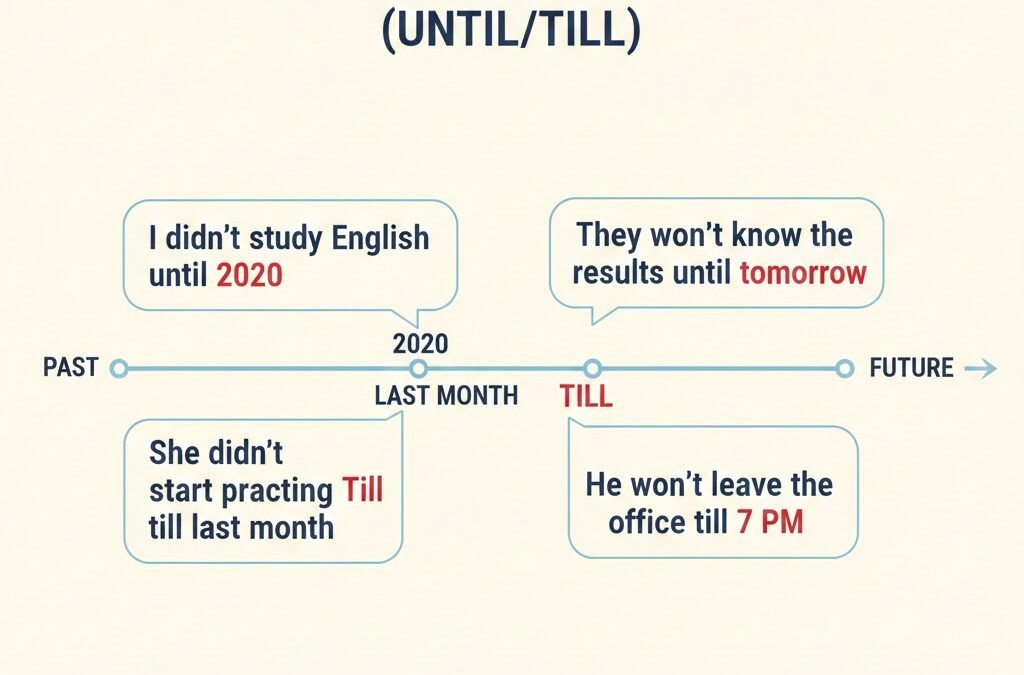
Introduction: How to Use “Until” and “Till” in Negative Sentences
How to use “until” and “till” in negative sentences is an important grammar topic in English. These words are often confused, especially in exam questions and daily writing. In negative sentences, “until” and “till” show that an action does not happen before a specific time. Understanding their correct use helps students avoid common grammatical errors.
What Do “Until” and “Till” Mean
“Until” and “till” are time-related words.
They indicate the point of time before which something does not happen.
“Till” is an informal form of “until,” but both have the same meaning.
Basic Rule for Negative Sentences
In negative sentences, “until” and “till” mean “not before that time.”
The action starts only after the mentioned time.
Example
I did not eat until evening.
Meaning: I ate only in the evening or after it.
How to Use “Until” and “Till” in Negative Sentences
- Use “not” before the verb
- Place “until” or “till” before the time expression
- The sentence implies delay, not continuation
Structure
Subject + did not / does not / will not + verb + until / till + time
Important Tips for Exams and Competitive Tests
- “Till” is never written as “’til” in exams
- “Until” is preferred in formal writing
- Negative sentences with “until” often imply a positive action later
- Do not use “by” as a replacement for “until”
- Avoid double negatives in the same sentence
- Understand the hidden meaning, not just the grammar
- In MCQs, check whether the sentence implies delay
- “Not until” often begins sentences for emphasis
- Both words act as prepositions or conjunctions
- Choose “until” in academic answers for safety
100 Examples of How to Use “Until” and “Till” in Negative Sentences
- I did not sleep until midnight.
- She did not arrive till morning.
- He did not speak until the meeting ended.
- We did not start the class till the teacher came.
- They did not leave until the rain stopped.
- I will not call you until evening.
- She will not eat till noon.
- He did not understand the lesson until it was explained again.
- We did not know the result till yesterday.
- They did not open the shop until 10 am.
- I did not read the news till night.
- She did not reply until Monday.
- He did not wake up till late morning.
- We did not begin the test until instructions were given.
- They did not announce the winner till the end.
- I did not finish my work until late evening.
- She did not meet him till last week.
- He did not realize the mistake until it was too late.
- We did not move till the signal turned green.
- They did not invest until they were sure.
- I did not feel hungry until afternoon.
- She did not attend school till she recovered.
- He did not stop running until he reached home.
- We did not discuss the issue till the manager arrived.
- They did not release the notice until today.
- I did not hear the news till this morning.
- She did not accept the offer until she checked the terms.
- He did not speak till the interview ended.
- We did not close the file until approval came.
- They did not celebrate till the results were declared.
- I did not see the message until late night.
- She did not cook till her parents returned.
- He did not complete the exam until the last minute.
- We did not travel till the weather improved.
- They did not confirm the plan until Friday.
- I did not understand the rule till the teacher explained it.
- She did not smile until she saw her child.
- He did not take a break till sunset.
- We did not hear from them until last month.
- They did not sell the land till the price increased.
- I did not trust him until he proved himself.
- She did not answer till her name was called.
- He did not finish dinner until 11 pm.
- We did not submit the form till the last date.
- They did not repair the road until complaints increased.
- I did not learn about the exam till yesterday.
- She did not agree until her doubts were cleared.
- He did not check the results till morning.
- We did not start work until permission was given.
- They did not stop talking till the bell rang.
- I did not notice the error until later.
- She did not relax till her work was done.
- He did not return home until midnight.
- We did not hear the announcement till noon.
- They did not understand the rules until training began.
- I did not feel confident till I practiced more.
- She did not respond until she verified the facts.
- He did not book tickets till the last moment.
- We did not publish the article until approval.
- They did not react till the issue became serious.
- I did not complete the course until last year.
- She did not join the office till July.
- He did not explain the topic until asked.
- We did not finalize the deal till the meeting ended.
- They did not stop the match until heavy rain.
- I did not learn driving till college.
- She did not understand grammar until proper practice.
- He did not attend the class till afternoon.
- We did not solve the problem until guidance came.
- They did not issue certificates till verification.
- I did not hear the alarm until morning.
- She did not trust the news till confirmation.
- He did not change his decision until facts emerged.
- We did not submit the report till approval.
- They did not know the truth until later.
- I did not eat anything till night.
- She did not receive the call until evening.
- He did not understand English till practice improved.
- We did not cancel the event until problems arose.
- They did not respond till pressure increased.
- I did not learn about the rule until now.
- She did not prepare seriously till exams came near.
- He did not rest until the work ended.
- We did not receive payment till last month.
- They did not close the gate until midnight.
- I did not speak till I was asked.
- She did not read the notice until late.
- He did not react till the news spread.
- We did not leave the hall until the speech ended.
- They did not believe the story till proof was shown.
- I did not understand the question until re-reading it.
- She did not update the file till today.
- He did not answer calls until morning.
- We did not realize the value till it was lost.
- They did not act until orders came.
- I did not know the schedule till yesterday.
- She did not complain until the issue repeated.
- He did not improve till regular practice.
- We did not recognize him until he spoke.
- They did not admit the mistake till evidence appeared.
Common Mistakes to Avoid
- Using “by” instead of “until”
- Writing “till” as “’til” in exams
- Assuming negative sentences mean continuous action
- Mixing tense incorrectly
- Ignoring implied positive meaning
FAQs: How to Use “Until” and “Till” in Negative Sentences
Q1. Is there any difference between “until” and “till” in negative sentences
No. Both have the same meaning. “Until” is more formal, while “till” is informal.
Q2. Can “not until” start a sentence
Yes. Example: Not until evening did he return home. This form is used for emphasis.
Q3. Which word is better for competitive exams
“Until” is safer and preferred in formal and academic writing.
Conclusion: How to Use “Until” and “Till” in Negative Sentences
How to use “until” and “till” in negative sentences becomes easy once the basic rule is clear. Both words show that an action does not happen before a certain time. With regular practice and attention to meaning, students can avoid mistakes and score better in exams and professional English usage.
Disclaimer: How to Use “Until” and “Till” in Negative Sentences
This article is for educational purposes only. Grammar usage may vary slightly based on context, style, and regional preferences.
Also Read: How to Form Passive Voice Sentences Easily With Rules and Examples
How to Use ‘Unless’ and ‘If Not’: The Complete Guide with Examples
About The Author
