Understanding how to form passive voice sentences is an important grammar skill for students and competitive exam aspirants. Passive voice is widely used in academic writing, reports, and formal English. This article explains the rules in simple language, provides useful tips, and includes 100 clear examples for better learning.
INTRODUCTION: How to Form Passive Voice Sentences
Learning how to form passive voice sentences is essential for writing correct and formal English. Passive voice focuses on the action rather than the doer of the action. It is commonly used in exams, official communication, academic writing, and news reports. This guide explains the rules, structure, and usage with simple explanations and examples.
WHAT IS PASSIVE VOICE
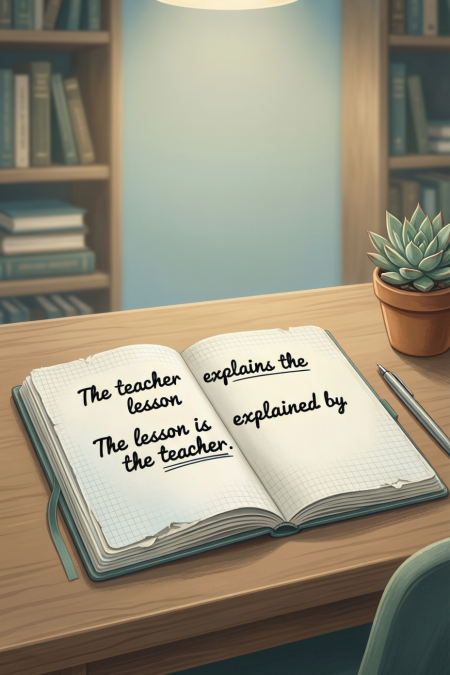
A sentence is said to be in passive voice when the subject receives the action instead of performing it.
Active voice: The subject does the action.
Passive voice: The subject receives the action.
BASIC RULE TO FORM PASSIVE VOICE SENTENCES
To understand how to form passive voice sentences, follow this basic structure:
Object of the active sentence becomes the subject.
Use the correct form of “be” verb according to tense.
Use the past participle (third form) of the main verb.
Mention the doer using “by” only if necessary.
STRUCTURE
Subject + appropriate form of be + past participle + by + object (optional)
HOW TO FORM PASSIVE VOICE SENTENCES IN DIFFERENT TENSES
Present Simple
Active: She writes a letter.
Passive: A letter is written by her.
Past Simple
Active: He completed the work.
Passive: The work was completed by him.
Future Simple
Active: They will announce the result.
Passive: The result will be announced.
100 EXAMPLES OF HOW TO FORM PASSIVE VOICE SENTENCES
- A letter is written by her.
- The work was completed by him.
- The match was won by the team.
- The book is read by many students.
- The room is cleaned every day.
- The cake was baked by my mother.
- The homework is done by the student.
- The road is repaired by workers.
- The song was sung by the artist.
- The car is washed every morning.
- The lesson is taught by the teacher.
- The prize was given to the winner.
- The report is prepared by the officer.
- The door was opened by the guard.
- The food is served hot.
- The rules are followed strictly.
- The letter was sent yesterday.
- The plan is approved by the manager.
- The news was announced on TV.
- The invitation was accepted.
- The project is completed on time.
- The window was broken accidentally.
- The exam is conducted annually.
- The tickets were sold out.
- The file is signed by the authority.
- The phone was repaired yesterday.
- The meeting is postponed.
- The mistake was corrected.
- The answer is written clearly.
- The speech was delivered confidently.
- The problem is solved easily.
- The road was blocked due to rain.
- The message is conveyed properly.
- The report was submitted late.
- The offer was rejected.
- The work is checked daily.
- The painting was admired by all.
- The task is assigned to him.
- The complaint was registered.
- The rule is explained clearly.
- The book was published last year.
- The application is verified.
- The bill was paid online.
- The instructions are followed carefully.
- The story was written beautifully.
- The form is filled correctly.
- The result is expected soon.
- The event was organized successfully.
- The house is painted every year.
- The song is played repeatedly.
- The news was confirmed.
- The laptop is repaired quickly.
- The dress was stitched neatly.
- The article is edited properly.
- The paper was evaluated.
- The machine is operated carefully.
- The decision was taken unanimously.
- The job is offered to her.
- The meeting was canceled.
- The order is processed online.
- The glass was broken.
- The subject is explained well.
- The bus was delayed.
- The building is constructed strongly.
- The instructions were ignored.
- The file was misplaced.
- The answer is checked twice.
- The rule is violated.
- The message was misunderstood.
- The issue is resolved.
- The lesson was revised.
- The announcement is made officially.
- The gate is closed at night.
- The offer was accepted happily.
- The schedule is updated regularly.
- The document was approved.
- The food was packed neatly.
- The call is answered politely.
- The order was delivered late.
- The form was rejected.
- The error is detected.
- The task was completed early.
- The class is conducted online.
- The work is appreciated.
- The rules were explained again.
- The room was decorated beautifully.
- The exam was postponed.
- The letter is posted today.
- The seat is reserved.
- The payment was processed.
- The mistake is forgiven.
- The topic is discussed clearly.
- The offer is announced publicly.
- The problem was identified.
- The machine was repaired.
- The homework is checked daily.
- The food is prepared hygienically.
- The result was declared.
- The project is reviewed.
- The answer was accepted.
IMPORTANT TIPS FOR STUDENTS AND EXAM CANDIDATES
Passive voice is commonly used in objective questions and sentence correction.
Always identify the tense before converting to passive voice.
Remember that only transitive verbs can form passive voice.
Use “by” only when the doer is important.
Avoid unnecessary passive voice in descriptive writing unless required.
FREQUENTLY ASKED QUESTIONS: How to Form Passive Voice Sentences
FAQ 1
What is the easiest way to learn how to form passive voice sentences?
Answer: Start by identifying the object in the active sentence and converting it into the subject of the passive sentence.
FAQ 2
Is passive voice important for competitive exams?
Answer: Yes, questions related to how to form passive voice sentences are common in SSC, Banking, UPSC, and other exams.
FAQ 3
Can all sentences be changed into passive voice?
Answer: No, only sentences with objects and transitive verbs can be converted into passive voice.
CONCLUSION: How to Form Passive Voice Sentences
Understanding how to form passive voice sentences helps improve grammar accuracy and exam performance. With clear rules, regular practice, and proper identification of tense, students can master passive voice easily. These examples and tips provide a strong foundation for academic and competitive exam preparation.
DISCLAIMER
This article is for educational purposes only. Examples and explanations are intended to help students understand grammar concepts and may not cover every possible exception.
Also Read: Master Reported Speech Rules: The Definitive Guide with 100+ Examples
Shocked vs Shocking: 100+ Examples & Key Differences for English Learners
About The Author
